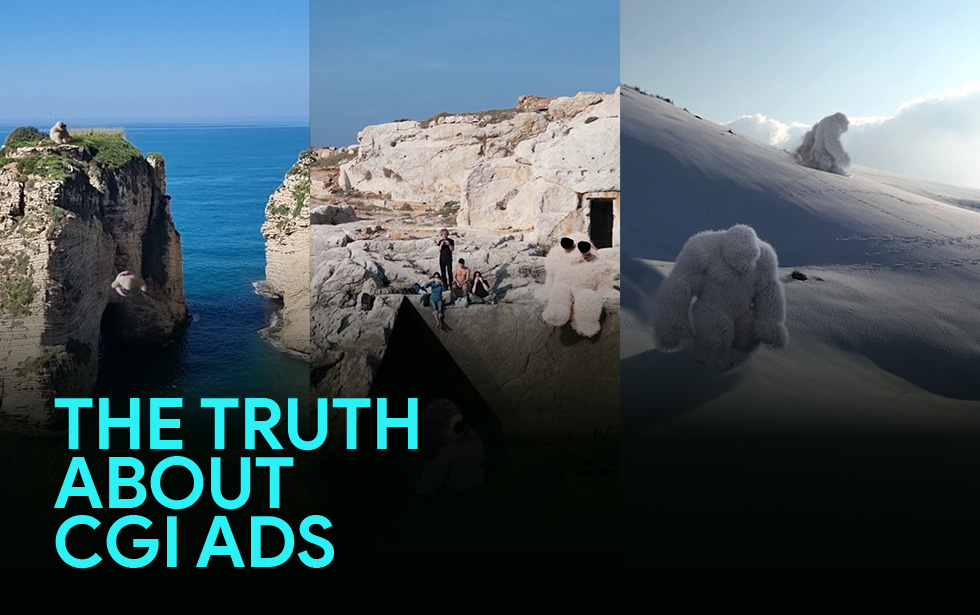
CGI ads use computer-generated imagery to show products, environments and ideas that would be difficult to capture with a camera alone. They can be fully animated or combine 3D visuals with live-action footage. Here is how to assess the approach, understand its limits and prepare a useful production brief.
What are CGI ads?
CGI means computer-generated imagery. In advertising, it can include a detailed product model, an animated character, an imagined environment or an object added to filmed footage. Visual effects, often shortened to VFX, include the techniques used to combine and finish these elements.
The result can be realistic or deliberately stylized. The right approach depends on the message, the audience and where the campaign will appear.
When is CGI useful for a campaign?
Showing something that cannot easily be filmed
CGI gives a creative team control over scale, movement and environments. A product can unfold, change materials or appear in an imagined setting. These choices work best when they help communicate a clear product benefit or brand idea.
Controlling the visual direction
Modeling, lighting, animation and compositing allow artists to shape how an object looks and moves. For a realistic result, details such as reflections, shadows and camera perspective need to work together.
Building variations from shared assets
A 3D asset can support several shots or campaign formats. Planning those variations early can make production more efficient. New scenes, languages and screen ratios may still require additional animation, rendering or editing.
Are CGI ads cheaper or faster than live action?
Not automatically. CGI can avoid some location, set-building or reshoot costs, but it introduces work such as modeling, look development, animation, rendering and compositing. A complex simulation or highly realistic character may take substantial production time.
The comparison depends on the concept, existing assets, shot count, level of detail and number of revisions. Reviewing both approaches against the same brief is more useful than assuming one is always cheaper.
What are the main limitations?
- Visual effects can distract from the message. The product or story still needs to be clear.
- Realism requires careful execution. Unconvincing lighting, movement or compositing can undermine the intended effect.
- Late changes can affect several stages. Revising a model or camera move after animation approval can create more work than changing an edit.
- A trend is not a campaign strategy. The visual concept should fit the brand and its audience.
How should you prepare a CGI production brief?
Start with the campaign objective and the central idea. Share product references, brand assets, any available 3D files, visual references and the intended release date. Specify the number of films, their durations, screen ratios and delivery platforms.
If CGI will be combined with a shoot, involve the visual production team before filming. Camera movement, lighting references and the material captured on set can affect what is possible in post-production.
Agree on review stages for the concept, storyboard, visual style and animation. This gives everyone a chance to resolve important choices before final rendering and compositing.
Explore a Cre8mania campaign
See the National Bank of Kuwait 7 Wonders campaign for an example of our VFX work. You can also explore our artists’ CGI experiments on Instagram.
Our motion and visual production services bring together animation, VFX and production. Share your campaign brief to discuss the visual approach and deliverables.