...

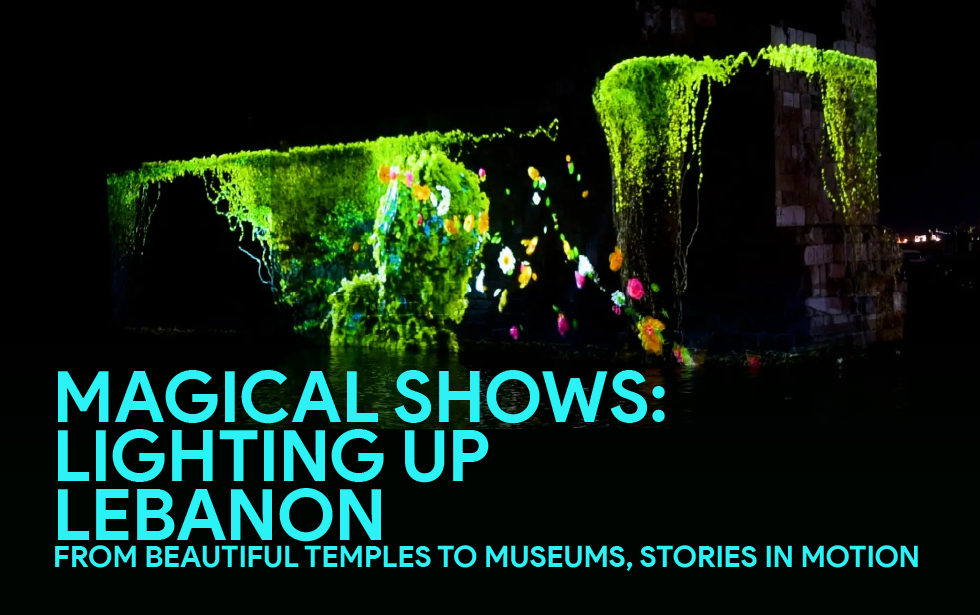
Magical Shows: Lighting Up Lebanon. From Beautiful Temples to Museums, Stories in Motion

We’ve spent years lighting up Lebanon.

From museums and temples to ports and stages, we’ve been trusted to bring cultural spaces to life with light, motion, and meaning.

It’s a belief that heritage still matters.

Lighting Up Lebanon: 3D projection mapping show in Lebanon Beirut National Museum

Lebanon: Our Creative Stage

Lebanon is more than home for Cre8mania, it’s where our ideas were first tested, trusted, and transformed into large-scale cultural moments. From Byblos to Baalbeck, our team has turned ancient walls into living canvases, proving that technology can honor the past while speaking to the present.

Every project has been a step in shaping how people experience heritage: not as static stones, but as living stories told through light and sound.

3D projection mapping show in Lebanon Baalbek
3D mapping show at Baalbeck International Festival, The Sound of Resilience

The Projects That Made History Glow

Byblos iHeritage – Tales from the Sky

On the historic ruins of Byblos, we created a show that brought mythology, astronomy, and ritual to life. Three themed chapters blended illusion, sound design, and storytelling, making visitors feel like they were walking through history under the stars.
Read more | Watch here

Byblos iHeritage – Archeo Game

We transformed the UNESCO site into an interactive, gamified adventure. Visitors became part of the story, traveling across three eras through projection mapping and gameplay logic. Heritage wasn’t just observed, it was lived.
Read more | Watch here

Baalbeck International Festival – The Sound of Resilience

In 2020, while the world was quiet, the Temple of Bacchus became a stage for resilience. Our projection visuals accompanied the live orchestra, broadcast on national television. It was proof that even in silence, Lebanon shines.
Read more | Watch here

National Museum of Beirut – La Nuit des Musées
During Lebanon’s Night of the Museums, the museum’s façade was reimagined through mapping and animation. The façade projection combined animation and sound during La Nuit des Musées.
Read more | Watch here

3D animation projection mapping on model in Lebanon
3D projection mapping at Chocostory

ChocoStory Museum – Beirut

Heritage can be sweet too. For Beirut’s chocolate museum, we designed an immersive experience with mapping and AR photobooths, turning a playful visit into a multi-sensory event.
Read more | Watch here

Mahmoud Kahil Award – Lebanese National Library

The Lebanese National Library became the stage for celebrating Arab creativity at the Mahmoud Kahil Award. For the event, we designed and executed a 3D projection mapping show that brought the library’s architecture to life. The visuals honored the spirit of illustration, comics, and storytelling, transforming a cultural landmark into a canvas for celebrating artistic voices from across the region.
Watch here

Why Heritage and Technology Belong Together

Projection mapping isn’t just about bright lights on stone. It’s about giving meaning to the decision to create such a project. It lets history live on in a form people can feel and remember. Mapping can intensify and enhance what’s already there, making monuments even more captivating. It turns architecture into a tribute, one that people carry with them long after the lights go out.

For Lebanon, these projects go beyond entertainment, they stand as acts of resilience. They remind both locals and visitors that our past carries weight, holds beauty, and offers lessons worth preserving.

By blending heritage with technology, we create something lasting, experiences that cross generations and keep culture alive in new forms.

Behind the Scenes: Lighting up Lebanon

Every project begins long before the first light hits the stone. Our team starts with research, walking through the site, studying its history, and listening to the stories that give it meaning. From there, we move into the concept and storyboarding, where ideas take visual form, ensuring that each sequence feels authentic to the monument and the culture it represents.

Once the concept is clear, our designers and animators step in. They build scenes in both 2D and 3D, blending artistry with precision. Music and sound design are chosen carefully, because the rhythm of the visuals must flow with the rhythm of the space itself.

Then comes the technical craft. Our crew tests projectors, aligns visuals across complex surfaces, and fine-tunes colors and motion until every detail is seamless. On-site rehearsals are where the magic starts to feel real, when a building begins to transform into a living story.

At its core, Lighting up Lebanon, projection mapping is a collaboration of disciplines: art direction, engineering, and heart. Without all three, the light would just fade. With them, history comes alive.

Looking Ahead

We believe that light can write history.

Lebanon has given us museums, temples, and stages to prove it. Each project has shown that when culture meets technology, heritage doesn’t just survive, it thrives in new forms. Yet the story is far from finished. Every upcoming project is another opportunity to honor the past while shaping how future generations will see it.

Because in the end, projection mapping isn’t just about visuals.
It’s presence.
It’s memory.
It’s Lighting up Lebanon, keeping it alive, resilient, and unforgettable.

Planning something big? Let’s light it together.

Cre8mania is ready to help you design experiences that feel alive.
Contact Us to Begin | Explore Our Work

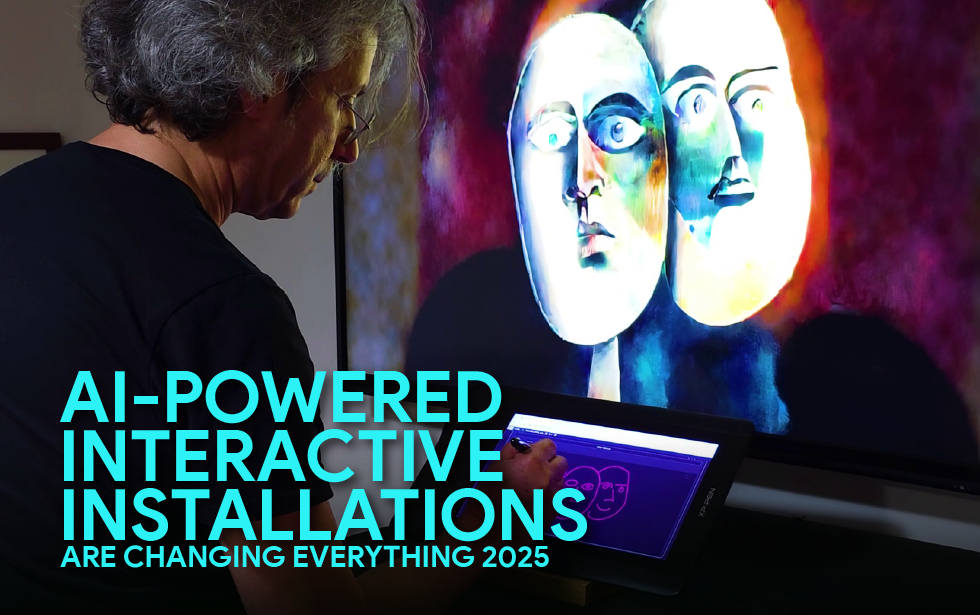
AI-Powered Interactive Installations: How They Work and What to Plan

AI-powered interactive installations turn audience participation into changing visuals. A camera feed, a drawing or another input can become part of the content on screen. This guide explains how these experiences work, shows examples from Cre8mania’s GENER8 projects and outlines what to prepare before production.

Continue reading “AI-Powered Interactive Installations: How They Work and What to Plan”

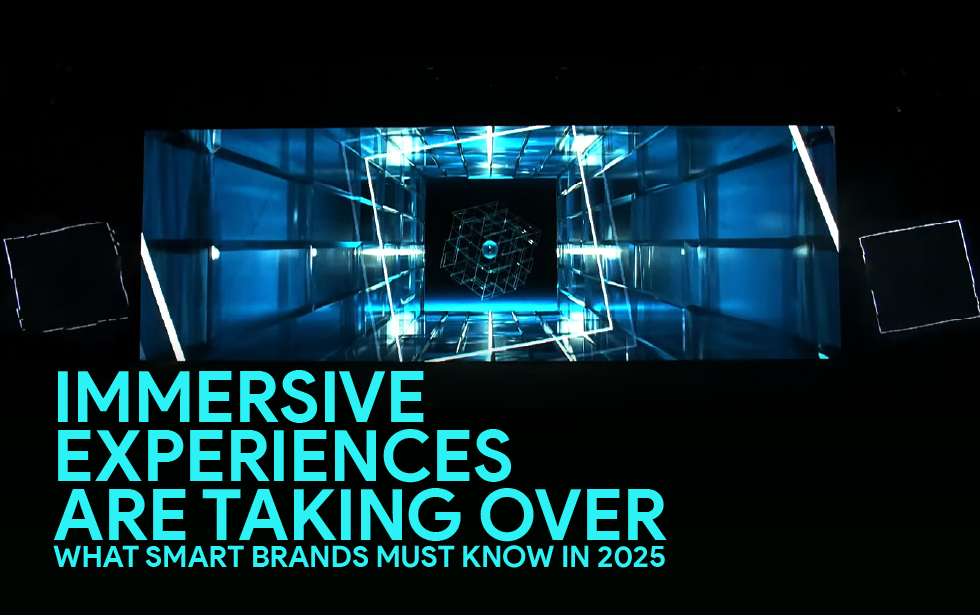
Immersive Experiences Are Taking Over : What Smart Brands Must Know in 2025

In today’s overstimulated world, consumers don’t just want to see; they want to feel, interact, and belong. 

As attention spans shrink and traditional advertisements blur into background noise, immersive experiences are rising above the clutter.

In this post, we will argue that immersive storytelling is no longer a novelty; it is the new currency of connection, and the most forward-thinking brands are already building entire worlds their audiences can step into. 

While traditional marketing speaks to people, immersive experiences speak through them, turning campaigns into memories.

You will discover what immersive experiences are, why they matter in 2025, and how your brand can shift from flat messaging to full-body engagement.

The Evolution of Engagement: Beyond Traditional Marketing

For years, traditional marketing has relied on a simple formula: visual appeal, clever slogans, and calls to action. 

For a while, it worked. Billboards turned heads in the past. Commercials left catchphrases in the living room. Social media advertisements captured clicks.

However, today’s audience is evolving.

We live in a hyper-digital world where consumers are bombarded with content every second. Static visuals barely register. Generic messaging, as marketing expert (Seth Godin, 2018) argues, has become invisible noise. 

Even videos, the crown jewel of engagement, are often skipped, muted, or forgotten. This is not just a feeling; a recent analysis shows a massive shift in how people spend, with a growing preference for products that deliver experiences (McKinsey & Company, 2025)

However, most brands are still playing catch-up. They pour budgets into campaigns that spark short-term attention but leave no long-term impression. What is missing is not creativity. It’s presence.

This is where immersive experiences come in, not as a trend, but as an evolution that lasts. 

What Are Immersive Experiences? 

Creative digital installation showcasing 3D mapping and interactive visuals

An immersive experience is an environment, digital, physical, or a hybrid of both, that pulls a participant into a simulated world or narrative. 

Unlike passive media, it intentionally blurs the line between the observer and participant by engaging multiple senses and inviting interaction.

The goal is to generate a state of “presence,” a psychological phenomenon where a person feels they are truly “there” within the mediated environment (Lombard & Ditton, 1997). 

This creates a powerful and memorable connection that cannot be replicated through passive viewing.

The Key Elements of Immersion

Truly immersive experiences are built on three fundamental pillars.

  • A Sense of Presence: You do not just watch; you feel physically and psychologically situated inside the experience.
  • Multisensory Design: The experience goes beyond sight and sound to incorporate other senses, such as touch, movement, and tangible awareness of space. This deepens the feeling of reality (Krishna, 2012)
  • Emotional Engagement: The narrative and interactions are designed to evoke genuine emotions, such as awe, wonder, nostalgia, or excitement, that are felt deeply and remembered long after the experience ends.

See how we brought immersive experiences to life in our latest portfolio projects

Common Forms in Today’s Market:

Immersive technologies are not gimmicks; they are powerful storytelling gateways. In Beirut and around the world, we see them used in increasingly creative ways.

  • Virtual and Augmented Reality (VR/AR): Fully simulated or digitally enhanced environments that users can explore.
  • Projection Mapping: Transforming architectural surfaces, like the stunning facades in Downtown Beirut, into dynamic, living canvases for stories.
  • Interactive Installations: Physical spaces in galleries, museums, or events that respond directly to a person’s touch, motion, or voice.
  • Themed Environments: From escape rooms to large-scale brand activations, these are real-world spaces built for physical and narrative exploration.

At Cre8mania, we believe that the future of branding does not live in pixels or slogans; it lives in these worlds. Worlds your audience can walk through, interact with, and feel real.. The brands that lead in 2025 will not just be the most visible; they will be the most felt.

Why Immersive Storytelling Matters: The Power of Emotional Connection

Creative immersive experience and digital installation showcasing 3D mapping and interactive visuals

In a time when everything is designed to distract, immersive experiences do something radical: they hold attention long enough to create emotion. In branding, emotion is everything. 

The foundational concept of the “experience economy” is built on the idea that customers now seek memorable events, not just goods and services (Pine & Gilmore 2020).

Brands that embrace immersive storytelling are not just entertaining; they are building emotional equity. They shape how people feel about them, not just what people know. 

Research has confirmed that when brands come to life in physical, interactive settings, they foster a deeper sense of connection and brand love (Van Kerrebroeck, Brengman & Willems, 2017). These feelings turn into word-of-mouth, virality, loyalty, and conversions.

However, ignoring this shift comes at a cost.

Brands that remain static, flat, traditional, and interruptive will continue to pour energy into content that is swiped past. Meanwhile, those who build immersive experiences will own the future.

Immersive experiences may sound futuristic, but incorporating them into a brand strategy is achievable. It begins with a few bold shifts in perspectives.

1. Start With Emotion, Not Just Execution

Before asking, “What technology should we use?” ask, “What do we want people to feel?”

Is it a wonder? Nostalgia? Empowerment? The most successful immersive experiences are built around a core emotion that guides every visual, auditory, and interactive element. 

As design expert Don Norman (2004) explains, products and experiences that connect with us on an emotional level are more effective and memorable. Technology should always follow the story, not the other way.

At Cre8mania, for instance, emotion guided our work on the Beirut Heritage Festival. We focused on evoking a sense of shared history and civic pride, using technology as a tool to bring these feelings to life.

2. Reimagine the Space Around Your Brand

Instead of thinking in terms of screens or slides, think in terms of the environment. Space is no longer just a physical location; it is a programmable canvas for the story.

This shift invites us to ask transformative questions.

  • What if your next product launch was held inside a projection-mapped building that reacted to the crowd?
  • What if your brand’s history was unfolded as an interactive installation at a major cultural event?

When you stop thinking about a campaign and start thinking about creating a “world,” you unlock a new level of engagement. What would your brand’s world look, sound, and feel like?

3. Collaborate with Story Architects, Not Just Designers

Creating immersive experiences is an interdisciplinary art form. It requires a fusion of talents: storytellers, sound designers, animators, spatial thinkers, and technologists who understand how to choreograph attention.

Briefing a vendor is not sufficient. To build a world, you must collaborate with a creative team that thinks in dimensions and moments–not just visuals. 

Therefore, it is critical to look for partners whose portfolios showcase diverse, story-driven immersive projects, proving that they can orchestrate a complete sensory journey.

The Future of Branding: Beyond Messages, Into Memories

In a world oversaturated with noise, immersive experiences do not merely cut through; they transform. They shift your brand from a message into a memory, a core principle of the modern “experience economy” where what people remember is what truly matters (Pine & Gilmore 2020).

This is no longer a question of technology; it is a question of connection.

So, as you plan your next campaign or launch, ask yourself: Why just tell your audience a story when you can invite them to live inside it?

Let’s Create the Unforgettable

Summer 2025 is in full swing, and Beirut’s vibrant event calendar is the ultimate stage for brand storytelling. At Cre8mania, we believe creativity meets technology in every pixel.

This is the moment to connect with an audience that craves genuine and memorable interactions.

Are you ready to build a world they will not want to leave?

Let’s talk.

Reference List:

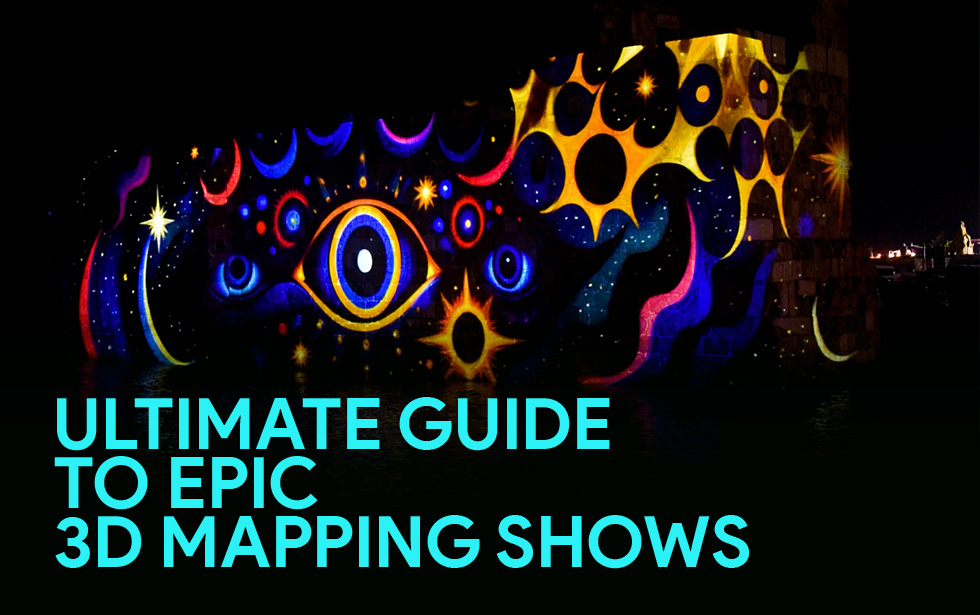
3D Projection Mapping: How It Works and How to Plan a Show

3D projection mapping turns buildings, objects and stage sets into animated surfaces. Creating a convincing show requires content designed for the surface, suitable projection equipment and careful alignment on site. This guide explains the process, shows examples from Cre8mania’s projects and outlines what to include in your brief.

Continue reading “3D Projection Mapping: How It Works and How to Plan a Show”

3D Mapping: The other face of Virtual Reality

What is 3D projection or mapping? Well it’s a technique used to turn objects, often irregularly shaped, into a display surface for video projection. These objects may vary from complex industrial landscapes, buildings, theatrical stages to small indoor objects. With the use of a specified software and a projector, the object is reproduced spatially and then the animation created will be projected on the real object fitting its surface.

Continue reading “3D Mapping: The other face of Virtual Reality”

Seraphinite AcceleratorOptimized by Seraphinite Accelerator
Turns on site high speed to be attractive for people and search engines.