...

Immersive Experience Design Done Right: Inside Cre8mania’s Work at AUB TransformED 2025

What separates a forgettable event from one people film on their phones? Immersive experience design. Not bigger screens or better production budgets. The strategic decision to make the story something an audience lives inside, rather than sits through.

That was the brief the Abdulla Al Ghurair Hub for Digital Teaching and Learning brought to Cre8mania for their TransformED Summit 2025. And it became one of the most complete immersive experience design projects we have delivered to date.
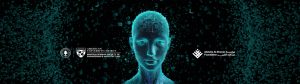
Cre8mania and AUB digital immersive AI host

The Problem With Important Stories

The Abdulla Al Ghurair Hub had earned serious credibility. Founded in 2019 as a partnership between AUB’s Maroun Semaan Faculty of Engineering and Architecture and the Abdulla Al Ghurair Foundation, the Hub was built on a mission that actually mattered: expanding access to quality STEM education across the Arab world.

By 2025, the numbers reflected that mission. Seventy-two online courses. Thirteen programs across four skill pillars. Over 3,600 learners reached across the region. A graduation cohort that grew from 52 in 2023 to 382 in 2025. An e-learning studio featured in the Harvard Business Review. All of this built through Lebanon’s economic crisis, a global pandemic, and regional conflict.

The problem was not the story. The problem is that significant stories, told conventionally, become background noise. Slides. Stats. Speeches. By minute three, the audience is somewhere else.

The Hub knew this. They wanted something that would move people without boring them. Accurate enough to satisfy AUB’s institutional standards. Emotionally charged enough to make a packed auditorium go quiet.

That tension is where immersive experience design gets interesting.

The Immersive Experience Design Strategy: Metaphor Over Literalism

Our first decision was the most important one: we would not show the story literally.

No footage of classrooms. No talking-head testimonials. No text-heavy timelines. Instead, we would translate the Hub’s story into a visual language that communicated meaning through form, motion, light, and color, a cinematic interpretation that could be understood without being explained.

We called the concept “The Core.”

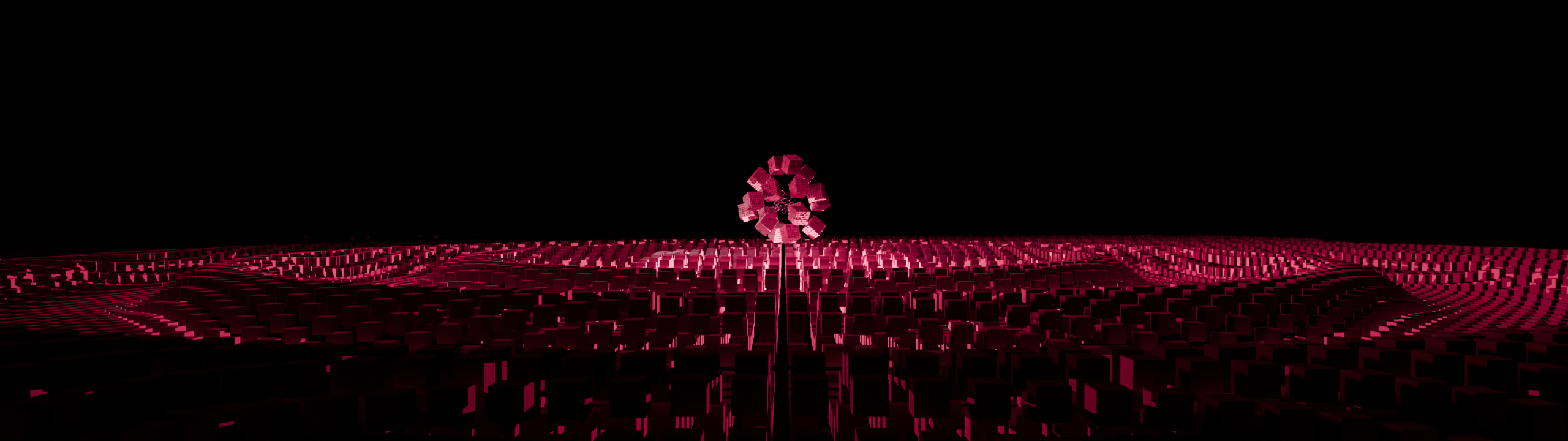
The Hub became a glowing central organism, pulsing with energy and expanding outward. Cubes orbiting the core represented learners, programs, and opportunities spreading across the Arab world. The Hub’s brand colors carried the emotional arc of the story: teal for mission and reach, burgundy for the challenges the Hub pushed through, purple for innovation and outreach, yellow for growth and momentum.

When Lebanon’s crises hit in the narrative timeline, the light dimmed. When the Hub adapted and kept running, the energy surged back. When impact numbers appeared, the cubes multiplied and spread across a map of the region.

No narration needed. The visual logic was the story.

This approach served two purposes. It gave AUB and the Hub an emotionally resonant representation that did not rely on sensitive or contested imagery. And it created something audiences had not seen attached to an educational institution in this region before, a full cinematic world built entirely around one organization’s purpose.

cre8mania and AUB al ghurair hub transformED 2025

Three Installations, One Immersive Experience Design

The immersive experience ran across three interconnected elements, each designed to work as a standalone moment and as part of a coherent whole.

The Cinematic 3D LED Animation

The anchor of the experience was a 4-minute 3D LED animation played on the main wall inside the auditorium, a screen spanning 12.5 meters wide and 9.5 meters high. This cinematic film moved through the Hub’s entire story, from founding vision to present impact, without a single slide or spoken word.

The animation opened with the two partner logos colliding and merging into the Hub’s glowing core. It moved through the mission, the crises, the programs, the growth in graduates, and the regional expansion. It closed on a network of light spreading outward with no visible boundary, with the final line: “This is only the beginning. The story is still being written.”

The auditorium went quiet during the screening. Then people started filming it on their phones.

The decision to open with the two institutional logos colliding and merging into a single core was intentional. It established, in the first five seconds, that this was not a presentation about a partnership. It was a demonstration of what happens when two institutions move in the same direction with enough force. The rest of the film followed that energy, building scene by scene through the Hub’s timeline without a single moment of conventional presentation design. No lower thirds. No explainer text. Every data point translated into motion.

The FEA AI Installation

FEA was the Hub’s existing AI persona, living on a screen, used for digital content. We brought her into the physical space of the summit and turned her into a live interactive AI installation.

Positioned as a concierge at the entrance of the event, FEA answered real questions from attendees in real time: program details, application processes, session schedules, speaker backgrounds. She guided visitors through the summit agenda and introduced keynote speakers from the stage.

The technology behind it was a custom-built live response system developed entirely by our team. What the audience experienced was something genuinely new at an academic event in the region: an AI that looked back at you, listened, and responded.

FEA became the most-shared element of the summit on social media and introduced a category of AI installation event technology that regional audiences had not encountered before in an academic setting. She positioned the Hub as an institution operating at the frontier of what education can look and feel like.

What made FEA’s installation different from a standard digital kiosk or FAQ screen was the quality of the response system and the physicality of the experience. Visitors were not clicking through a menu. They were having a conversation with something that looked back at them. For an academic summit focused on the future of digital education, the symbolism was hard to miss: the most talked-about element of the event was itself an example of what the Hub’s programs are training people to build and use. The medium was the message.

The Interactive Digital Wall

Outside the main hall, a 9-meter LED wall divided into three interactive zones carried the practical layer of the summit. Zone one displayed the full program catalog with tappable details. Zone two told the Hub’s story through scrollable milestones and regional partnerships. Zone three housed the live summit agenda, filterable by strand, time, and format, with real-time updates.

No printed guides. No static banners. Every surface in the space was part of the same designed digital event experience, from the lobby to the auditorium.

The wall also solved a practical problem that most large-scale events handle badly: information access. At a two-day summit with multiple strands, keynotes, workshops, and parallel sessions, attendees often lose track of what is happening where and when. The interactive agenda zone eliminated that friction entirely. Attendees could filter by format, strand, or time, and the real-time update capability meant the wall reflected last-minute changes instantly. The result was a surface that was both atmospherically consistent with the rest of the immersive experience design and operationally useful throughout the entire event.

What Execution Actually Requires

The visual work is what people remember. The operational work is what makes it possible.

Our team handled the full scope: concept development, visual design, 3D LED animation production, FEA live system development, digital wall content and interaction design, supplier coordination, and on-site management across both summit days. Every element of the physical environment was managed and maintained by Cre8mania from setup to close.

For an institution like AUB, this kind of project demands more than creative output. It requires a partner that understands institutional stakes, communicates clearly at every stage, and delivers with zero margin for error. That is what our account and production team provided.

The Result

AUB’s team described the experience as “submerging into the story without getting bored.”

That sentence is the brief, answered.

The summit generated significant social media activity, driven primarily by FEA, who represented a technology that felt genuinely new to regional audiences. The event positioned AUB and the Abdulla Al Ghurair Hub as institutions at the forefront of academic innovation, not just in curriculum, but in how they communicate who they are.

For a room full of educators, administrators, and industry professionals, the experience demonstrated something no slide deck can: that the Hub’s commitment to innovation is not a talking point. It is the atmosphere they create.

You can learn more about the TransformED Summit at aub-transformed.com.

What Immersive Experience Design Can Do for Your Event

The most valuable events are not the ones with the biggest stages. They are the ones where the audience leaves with a feeling they cannot fully explain and a memory that does not fade.

Immersive experience design is not a production upgrade. It is a strategic decision about how seriously you take the people in the room, and how much your story is worth communicating properly.

If you are planning an event, a summit, a launch, or an institutional moment that needs to land with real weight, this is the kind of thinking we bring to every project.
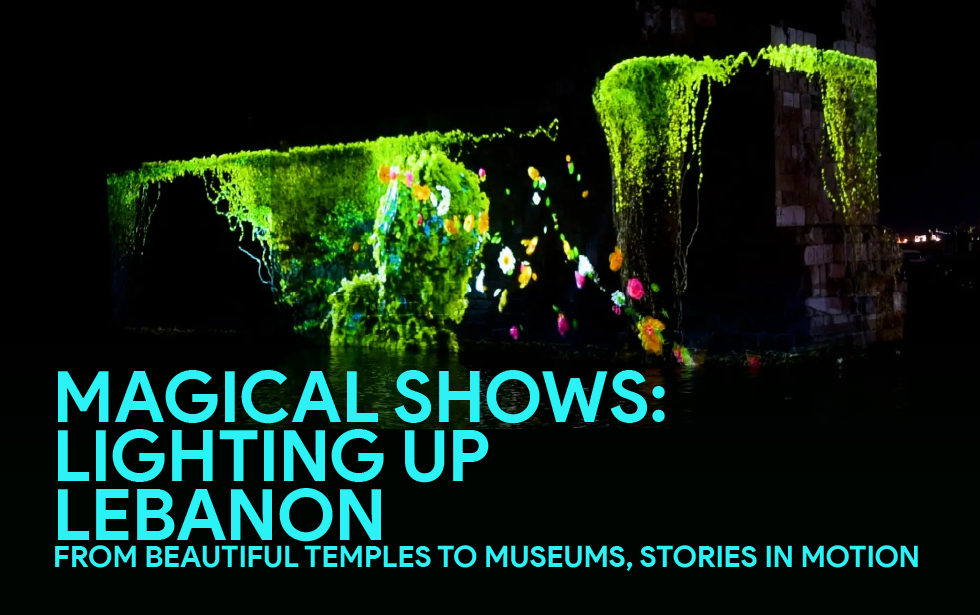
Magical Shows: Lighting Up Lebanon. From Beautiful Temples to Museums, Stories in Motion

We’ve spent years lighting up Lebanon.

From museums and temples to ports and stages, we’ve been trusted to bring cultural spaces to life with light, motion, and meaning.

It’s a belief that heritage still matters.

Lighting Up Lebanon: 3D projection mapping show in Lebanon Beirut National Museum

Lebanon: Our Creative Stage

Lebanon is more than home for Cre8mania, it’s where our ideas were first tested, trusted, and transformed into large-scale cultural moments. From Byblos to Baalbeck, our team has turned ancient walls into living canvases, proving that technology can honor the past while speaking to the present.

Every project has been a step in shaping how people experience heritage: not as static stones, but as living stories told through light and sound.

3D projection mapping show in Lebanon Baalbek
3D mapping show at Baalbeck International Festival, The Sound of Resilience

The Projects That Made History Glow

Byblos iHeritage – Tales from the Sky

On the historic ruins of Byblos, we created a show that brought mythology, astronomy, and ritual to life. Three themed chapters blended illusion, sound design, and storytelling, making visitors feel like they were walking through history under the stars.
Read more | Watch here

Byblos iHeritage – Archeo Game

We transformed the UNESCO site into an interactive, gamified adventure. Visitors became part of the story, traveling across three eras through projection mapping and gameplay logic. Heritage wasn’t just observed, it was lived.
Read more | Watch here

Baalbeck International Festival – The Sound of Resilience

In 2020, while the world was quiet, the Temple of Bacchus became a stage for resilience. Our projection visuals accompanied the live orchestra, broadcast on national television. It was proof that even in silence, Lebanon shines.
Read more | Watch here

National Museum of Beirut – La Nuit des Musées
During Lebanon’s Night of the Museums, the museum’s façade was reimagined through mapping and animation. The façade projection combined animation and sound during La Nuit des Musées.
Read more | Watch here

3D animation projection mapping on model in Lebanon
3D projection mapping at Chocostory

ChocoStory Museum – Beirut

Heritage can be sweet too. For Beirut’s chocolate museum, we designed an immersive experience with mapping and AR photobooths, turning a playful visit into a multi-sensory event.
Read more | Watch here

Mahmoud Kahil Award – Lebanese National Library

The Lebanese National Library became the stage for celebrating Arab creativity at the Mahmoud Kahil Award. For the event, we designed and executed a 3D projection mapping show that brought the library’s architecture to life. The visuals honored the spirit of illustration, comics, and storytelling, transforming a cultural landmark into a canvas for celebrating artistic voices from across the region.
Watch here

Why Heritage and Technology Belong Together

Projection mapping isn’t just about bright lights on stone. It’s about giving meaning to the decision to create such a project. It lets history live on in a form people can feel and remember. Mapping can intensify and enhance what’s already there, making monuments even more captivating. It turns architecture into a tribute, one that people carry with them long after the lights go out.

For Lebanon, these projects go beyond entertainment, they stand as acts of resilience. They remind both locals and visitors that our past carries weight, holds beauty, and offers lessons worth preserving.

By blending heritage with technology, we create something lasting, experiences that cross generations and keep culture alive in new forms.

Behind the Scenes: Lighting up Lebanon

Every project begins long before the first light hits the stone. Our team starts with research, walking through the site, studying its history, and listening to the stories that give it meaning. From there, we move into the concept and storyboarding, where ideas take visual form, ensuring that each sequence feels authentic to the monument and the culture it represents.

Once the concept is clear, our designers and animators step in. They build scenes in both 2D and 3D, blending artistry with precision. Music and sound design are chosen carefully, because the rhythm of the visuals must flow with the rhythm of the space itself.

Then comes the technical craft. Our crew tests projectors, aligns visuals across complex surfaces, and fine-tunes colors and motion until every detail is seamless. On-site rehearsals are where the magic starts to feel real, when a building begins to transform into a living story.

At its core, Lighting up Lebanon, projection mapping is a collaboration of disciplines: art direction, engineering, and heart. Without all three, the light would just fade. With them, history comes alive.

Looking Ahead

We believe that light can write history.

Lebanon has given us museums, temples, and stages to prove it. Each project has shown that when culture meets technology, heritage doesn’t just survive, it thrives in new forms. Yet the story is far from finished. Every upcoming project is another opportunity to honor the past while shaping how future generations will see it.

Because in the end, projection mapping isn’t just about visuals.
It’s presence.
It’s memory.
It’s Lighting up Lebanon, keeping it alive, resilient, and unforgettable.

Planning something big? Let’s light it together.

Cre8mania is ready to help you design experiences that feel alive.

Contact Us to Begin | Explore Our Work

Immersive Experiences Are Taking Over : What Smart Brands Must Know in 2025

In today’s overstimulated world, consumers don’t just want to see; they want to feel, interact, and belong. 

As attention spans shrink and traditional advertisements blur into background noise, immersive experiences are rising above the clutter.

In this post, we will argue that immersive storytelling is no longer a novelty; it is the new currency of connection, and the most forward-thinking brands are already building entire worlds their audiences can step into. 

While traditional marketing speaks to people, immersive experiences speak through them, turning campaigns into memories.

You will discover what immersive experiences are, why they matter in 2025, and how your brand can shift from flat messaging to full-body engagement.

The Evolution of Engagement: Beyond Traditional Marketing

For years, traditional marketing has relied on a simple formula: visual appeal, clever slogans, and calls to action. 

For a while, it worked. Billboards turned heads in the past. Commercials left catchphrases in the living room. Social media advertisements captured clicks.

However, today’s audience is evolving.

We live in a hyper-digital world where consumers are bombarded with content every second. Static visuals barely register. Generic messaging, as marketing expert (Seth Godin, 2018) argues, has become invisible noise. 

Even videos, the crown jewel of engagement, are often skipped, muted, or forgotten. This is not just a feeling; a recent analysis shows a massive shift in how people spend, with a growing preference for products that deliver experiences (McKinsey & Company, 2025)

However, most brands are still playing catch-up. They pour budgets into campaigns that spark short-term attention but leave no long-term impression. What is missing is not creativity. It’s presence.

This is where immersive experiences come in, not as a trend, but as an evolution that lasts. 

What Are Immersive Experiences? 

Creative digital installation showcasing 3D mapping and interactive visuals

An immersive experience is an environment, digital, physical, or a hybrid of both, that pulls a participant into a simulated world or narrative. 

Unlike passive media, it intentionally blurs the line between the observer and participant by engaging multiple senses and inviting interaction.

The goal is to generate a state of “presence,” a psychological phenomenon where a person feels they are truly “there” within the mediated environment (Lombard & Ditton, 1997). 

This creates a powerful and memorable connection that cannot be replicated through passive viewing.

The Key Elements of Immersion

Truly immersive experiences are built on three fundamental pillars.

  • A Sense of Presence: You do not just watch; you feel physically and psychologically situated inside the experience.
  • Multisensory Design: The experience goes beyond sight and sound to incorporate other senses, such as touch, movement, and tangible awareness of space. This deepens the feeling of reality (Krishna, 2012)
  • Emotional Engagement: The narrative and interactions are designed to evoke genuine emotions, such as awe, wonder, nostalgia, or excitement, that are felt deeply and remembered long after the experience ends.

See how we brought immersive experiences to life in our latest portfolio projects

Common Forms in Today’s Market:

Immersive technologies are not gimmicks; they are powerful storytelling gateways. In Beirut and around the world, we see them used in increasingly creative ways.

  • Virtual and Augmented Reality (VR/AR): Fully simulated or digitally enhanced environments that users can explore.
  • Projection Mapping: Transforming architectural surfaces, like the stunning facades in Downtown Beirut, into dynamic, living canvases for stories.
  • Interactive Installations: Physical spaces in galleries, museums, or events that respond directly to a person’s touch, motion, or voice.
  • Themed Environments: From escape rooms to large-scale brand activations, these are real-world spaces built for physical and narrative exploration.

At Cre8mania, we believe that the future of branding does not live in pixels or slogans; it lives in these worlds. Worlds your audience can walk through, interact with, and feel real.. The brands that lead in 2025 will not just be the most visible; they will be the most felt.

Why Immersive Storytelling Matters: The Power of Emotional Connection

Creative immersive experience and digital installation showcasing 3D mapping and interactive visuals

In a time when everything is designed to distract, immersive experiences do something radical: they hold attention long enough to create emotion. In branding, emotion is everything. 

The foundational concept of the “experience economy” is built on the idea that customers now seek memorable events, not just goods and services (Pine & Gilmore 2020).

Brands that embrace immersive storytelling are not just entertaining; they are building emotional equity. They shape how people feel about them, not just what people know. 

Research has confirmed that when brands come to life in physical, interactive settings, they foster a deeper sense of connection and brand love (Van Kerrebroeck, Brengman & Willems, 2017). These feelings turn into word-of-mouth, virality, loyalty, and conversions.

However, ignoring this shift comes at a cost.

Brands that remain static, flat, traditional, and interruptive will continue to pour energy into content that is swiped past. Meanwhile, those who build immersive experiences will own the future.

Immersive experiences may sound futuristic, but incorporating them into a brand strategy is achievable. It begins with a few bold shifts in perspectives.

1. Start With Emotion, Not Just Execution

Before asking, “What technology should we use?” ask, “What do we want people to feel?”

Is it a wonder? Nostalgia? Empowerment? The most successful immersive experiences are built around a core emotion that guides every visual, auditory, and interactive element. 

As design expert Don Norman (2004) explains, products and experiences that connect with us on an emotional level are more effective and memorable. Technology should always follow the story, not the other way.

At Cre8mania, for instance, emotion guided our work on the Beirut Heritage Festival. We focused on evoking a sense of shared history and civic pride, using technology as a tool to bring these feelings to life.

2. Reimagine the Space Around Your Brand

Instead of thinking in terms of screens or slides, think in terms of the environment. Space is no longer just a physical location; it is a programmable canvas for the story.

This shift invites us to ask transformative questions.

  • What if your next product launch was held inside a projection-mapped building that reacted to the crowd?
  • What if your brand’s history was unfolded as an interactive installation at a major cultural event?

When you stop thinking about a campaign and start thinking about creating a “world,” you unlock a new level of engagement. What would your brand’s world look, sound, and feel like?

3. Collaborate with Story Architects, Not Just Designers

Creating immersive experiences is an interdisciplinary art form. It requires a fusion of talents: storytellers, sound designers, animators, spatial thinkers, and technologists who understand how to choreograph attention.

Briefing a vendor is not sufficient. To build a world, you must collaborate with a creative team that thinks in dimensions and moments–not just visuals. 

Therefore, it is critical to look for partners whose portfolios showcase diverse, story-driven immersive projects, proving that they can orchestrate a complete sensory journey.

The Future of Branding: Beyond Messages, Into Memories

In a world oversaturated with noise, immersive experiences do not merely cut through; they transform. They shift your brand from a message into a memory, a core principle of the modern “experience economy” where what people remember is what truly matters (Pine & Gilmore 2020).

This is no longer a question of technology; it is a question of connection.

So, as you plan your next campaign or launch, ask yourself: Why just tell your audience a story when you can invite them to live inside it?

Let’s Create the Unforgettable

Summer 2025 is in full swing, and Beirut’s vibrant event calendar is the ultimate stage for brand storytelling. At Cre8mania, we believe creativity meets technology in every pixel.

This is the moment to connect with an audience that craves genuine and memorable interactions.

Are you ready to build a world they will not want to leave?

Let’s talk.

Reference List:

3D Projection Mapping: How It Works and How to Plan a Show

3D projection mapping turns buildings, objects and stage sets into animated surfaces. Creating a convincing show requires content designed for the surface, suitable projection equipment and careful alignment on site. This guide explains the process, shows examples from Cre8mania’s projects and outlines what to include in your brief.

Continue reading “3D Projection Mapping: How It Works and How to Plan a Show”

Set your brand apart! Four immersive experiences to impact your audience.

In today’s fast-evolving marketing and creative landscape, brands are continually seeking new and innovative ways to connect with their customers. Technology and art stand as a driving force behind these efforts, enabling brands to craft immersive experiences that leave a lasting impact. We explore below 4 innovative strategies with real examples for each one that let companies transform the way they engage with their audience.

Continue reading “Set your brand apart! Four immersive experiences to impact your audience.”

Is using AI to execute big scale animation projects a fantasy?

A new frontier has emerged in the 2D and 3D animation landscape, and seems to be here to stay and develop. Big scale animation shows, once solely reliant on human ingenuity and time consuming processes, are now being revolutionized by the power of generative Artificial Intelligence. A variety of AI tools are indeed paving the way for unprecedented levels of creativity and efficiency.

Continue reading “Is using AI to execute big scale animation projects a fantasy?”

3D Virtual Exhibition

The VIRTUAL SPACE is Cre8mania’s latest digital solution specifically designed for events, exhibitions, fairs, retail businesses and more. 

You can discover this digital solution through our latest project for the Middle East Institute:
https://cre8mania.com/oldwebsite/ny_virtual_show/

Continue reading “3D Virtual Exhibition”

Digital museum experiences: planning around the collection and visitor

Originally published on 29 July 2019. Updated on 24 September 2026 with Cre8mania project examples and a planning framework for cultural institutions.

A digital museum experience should help people explore a collection, a place or a story. The choice between projection, a touchscreen or a wider audiovisual environment follows that purpose. A visitor choosing a historical period on a model needs a different experience from an audience watching a scheduled show on a museum façade.

Two Cre8mania projects illustrate that difference: the visitor-controlled Byblos Archeo Game and the National Museum of Beirut’s La Nuit des Musées projection. They offer practical reference points for curators, cultural institutions and exhibition producers preparing a brief.

Start with the interpretation goal

Define what visitors should discover and which source material supports the story. Identify the historical periods, objects or ideas to explain, and who will approve the interpretation. Images and animation can make a reconstruction easier to explore, but the creative treatment needs a clear relationship to the available evidence.

Agree how to distinguish documented features from interpretation. This is especially useful when a reconstruction presents a place as it appeared in different periods.

Example: choosing a period in the Byblos Archeo Game

For iHeritage / CCIA-BML’s Byblos Archeo Game, created in Lebanon in 2023, Cre8mania combined dual projection on a model with a touchscreen menu. Visitors can select among three historical periods, with an audio guide providing context.

The work included concept development, virtual heritage reconstruction, 3D animation and interaction. Cre8mania collaborated with historians and archaeologists from Lebanon’s Directorate General of Antiquities. Unreal Engine and Blender were used for the modeling and reconstruction.

The project shows how one clear visitor action—choosing a period—can organize a larger body of historical content. Explore our interactive installation design for related formats.

Example: a shared narrative on the museum façade

At the National Museum of Beirut’s La Nuit des Musées, Cre8mania developed concept, 2D and 3D animation, projection mapping and sound design. The seven-minute show followed the theme of evolution, from the creation of the universe towards the future.

This format gives an audience a shared visual sequence on an architectural surface. It differs from an exhibit where visitors control the order or pace. Our projection mapping service explains the creative scope and venue information needed to prepare a similar brief.

Define the visitor journey and operating conditions

  • Participation: what can visitors choose, trigger or explore, and how will they understand where to start?
  • Audience flow: how many people can participate at once, and where will others wait or watch?
  • Access: consider language, readability, reach, seating and alternatives to audio-only or visual-only instructions.
  • Environment: review ambient light, sound spill, available space and viewing positions with the venue and technical team.
  • Operation: agree opening hours, reset behavior, maintenance, content updates and responsibility for on-site support.

Decide how to evaluate the experience

Before launch, define what the institution wants to learn: whether visitors find the interaction, understand the instructions or can identify the main historical idea. Test those questions with people unfamiliar with the exhibit. Audience numbers, satisfaction or learning gains require an appropriate measurement method; visual documentation alone answers a different question—what was delivered.

For the wider terminology, read our guide to digital, interactive and immersive installations. To discuss a cultural project, share the venue, interpretation goals and available material with Cre8mania.

Explaining Web AR and VR

Are you ready for the next big thing in the web world? It’s WebAR and it is here to stay! WebAR uses mobile devices to provide dynamic Augmented Reality experiences; the best part? No apps nor downloads needed, just a simple click access from the web page.

Let’s go in-depth through this interview with Cre8mania’s Technical Artist – Zyad Mardini

Continue reading “Explaining Web AR and VR”

3D Mapping: The other face of Virtual Reality

What is 3D projection or mapping? Well it’s a technique used to turn objects, often irregularly shaped, into a display surface for video projection. These objects may vary from complex industrial landscapes, buildings, theatrical stages to small indoor objects. With the use of a specified software and a projector, the object is reproduced spatially and then the animation created will be projected on the real object fitting its surface.

Continue reading “3D Mapping: The other face of Virtual Reality”

Seraphinite AcceleratorOptimized by Seraphinite Accelerator
Turns on site high speed to be attractive for people and search engines.